What changes a footballer's market value?
Updated:
In short
Market value is an estimate of what a player might fetch on the transfer market. Ability, age, league, time left on the contract, form and interest push that estimate up or down. Value is not a price tag, because the fee paid is settled by negotiation.
What is market value?
Market value is an estimate of roughly what a footballer might fetch on the transfer market. It is not an official price and it binds no club.
Different sources produce the estimate in different ways. Some lean on expert opinion, some on statistical models, some on past transfers of similar players. That is why you may see different values for the same player in different places. None of them counts as the definitive answer.
Value is still useful. It helps you judge which way a career is heading, how strong a club's squad is, and whether a transfer story sounds plausible.
Which factors decide market value?
Ability, age, the level of the league, time left on the contract, form and interest do most of the work. They act together, not in isolation.
- Ability: the player's overall level is the base of the value. Among elite players, a small gap in level can turn into a large gap in value.
- Age: a young player with room to grow carries potential in the value. Value peaks in the mature years of a career and falls after that.
- League: the same performance counts for more in a strong, widely watched league.
- Contract length: when little time is left on the contract, value drops.
- Form: performances, goals and assists in recent matches can move value quickly.
- Interest: an international call-up, a goal everyone is talking about or a transfer rumour raises demand.
Position plays a part too. The contribution of players who score and create goals is easy to measure, so their value often rises in a more visible way.
Why does contract length affect value so much?
Because a player whose contract is about to end could soon leave for nothing. A buying club knows that by waiting a little it could sign the player without a fee, so it is reluctant to pay a high fee today.
That weakens the selling club's hand. With a player on a long contract the situation is reversed: the club does not have to sell and is strong in negotiation.
This is the reason clubs open extension talks early with players they rate. There is a balance for the player as well. A long contract brings security but can make leaving harder. A short contract brings freedom but offers less protection against risks such as injury.
We explain how leaving on a free works in our guide to football transfer types.
Is market value the same as a transfer fee?
No. Market value is an estimate, while the transfer fee is the amount the clubs actually agree at the table. They can sit a long way apart.
The main reasons a fee drifts from the value are:
- If the selling club needs money, the fee can fall.
- If several clubs want the player, the fee rises.
- If the contract has a release clause, the fee is known in advance.
- Late in a transfer window, the side in a hurry gives more ground.
- Add-ons and a sell-on share can make the reported figure look different from what the deal is really worth.
The player's representative often shapes the negotiation too. You can read about that role in what does a football agent do.
How does this work in Kickhood?
Kickhood is not released yet. It is a footballer life simulator being prepared for iPhone, and what follows is the general way the game is designed to work.
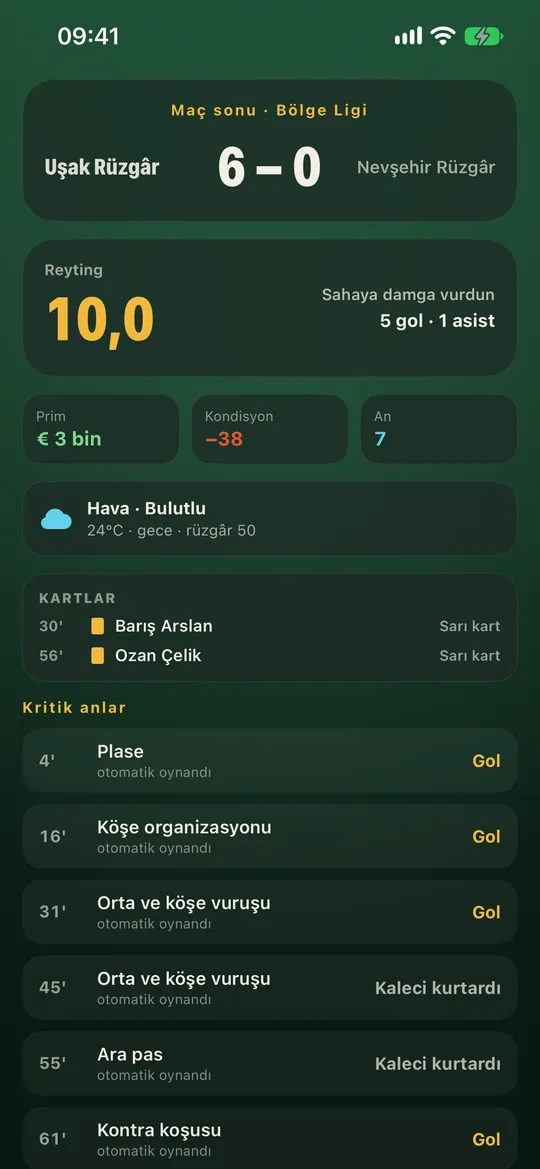
In the game, both your player and the other players have a market value. It is shown in the game and updated regularly.
The factors behind it follow the same logic as in real life: the player's overall level, age, the strength of the league, time left on the contract, form in recent matches and the interest around the player. Nearing the end of a contract lowers the value. Value stays within limits, so a single good match does not inflate it for ever.
In the game, too, value and transfer fee are separate things. The fee is decided by negotiation, contract length and the selling club's need for cash. So the offer you expect may not arrive even when your value is high, and the reverse can happen as well.
Value is the result of your decisions on and off the pitch. For the wider idea behind the genre, see what is a footballer life simulator, or visit the home page.
FAQ
Who decides a player's market value?
There is no single official body. Values are estimates made by different sources using their own methods. Clubs also make their own assessments internally and usually keep them private.
Why does market value drop suddenly?
The most common reasons are a serious injury, a long dip in form, a lack of playing time and a contract nearing its end. Value also declines naturally as a player gets older.
Why do young players seem more valuable?
Because value includes expectations about the future. A young player's chance of improving and the long career ahead are an opportunity for the buying club, both on the pitch and for a later resale.
Does a player with a high market value earn higher wages?
Often yes, but there is no direct link. Wages are decided by the club's budget, the player's bargaining power and the other items in the contract. Value is only a reference point in that negotiation.
This article is general information, not legal or financial advice. Rules differ by country and league.